Spring has arrived, and with it comes one of my favorite herbs: chives. These unassuming little herbs might not get the spotlight like rosemary or parsley, but they hold their own as the first green gems to reappear after winter. And right now, they’re showing off in the most spectacular way; it’s chive blossom season!
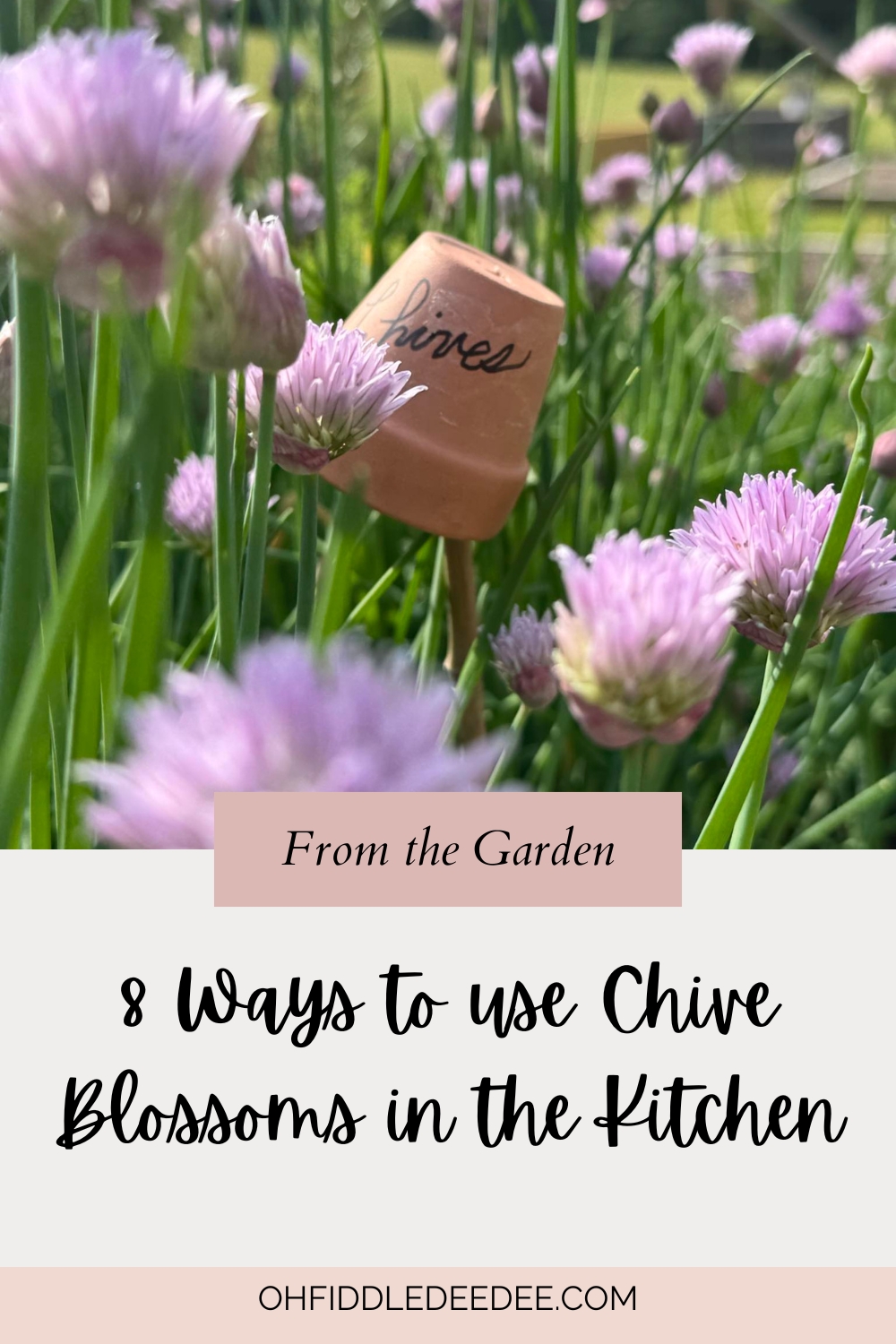
First things first, what are chives? Think of them as the gentler cousin of onions, with a mild, grassy flavor that adds a subtle kick to just about anything. Their botanical name is Allium schoenoprasum, but no need to get formal, just channeling my inner Martha Stewart by throwing out that tidbit of information. Chives are perennials, meaning they’re an ultimate long-term garden addition. Plant them once, and they’ll keep coming back year after year, spreading as they do so. That’s why they’re among the first green beauties to poke through the soil each spring, often before you’ve even dusted off your gardening gloves.
But here’s the real showstopper with chives: the blossoms. Those delicate purple-pink pom-poms are not only gorgeous but also edible, bringing beauty and a burst of flavor to the table. If you’ve never looked out over a patch of blooming chives, I highly recommend it. It’s like a live Monet painting in your garden, but tastier.

So, what do you do with all these chives and blossoms? Oh, the possibilities are endless! Here are eight ideas to inspire you:
*Snip and Sprinkle: Use chopped chive leaves to top baked potatoes, scrambled eggs, soups, and salads. They’re a simple way to elevate any dish from “meh” to “chef’s kiss.”
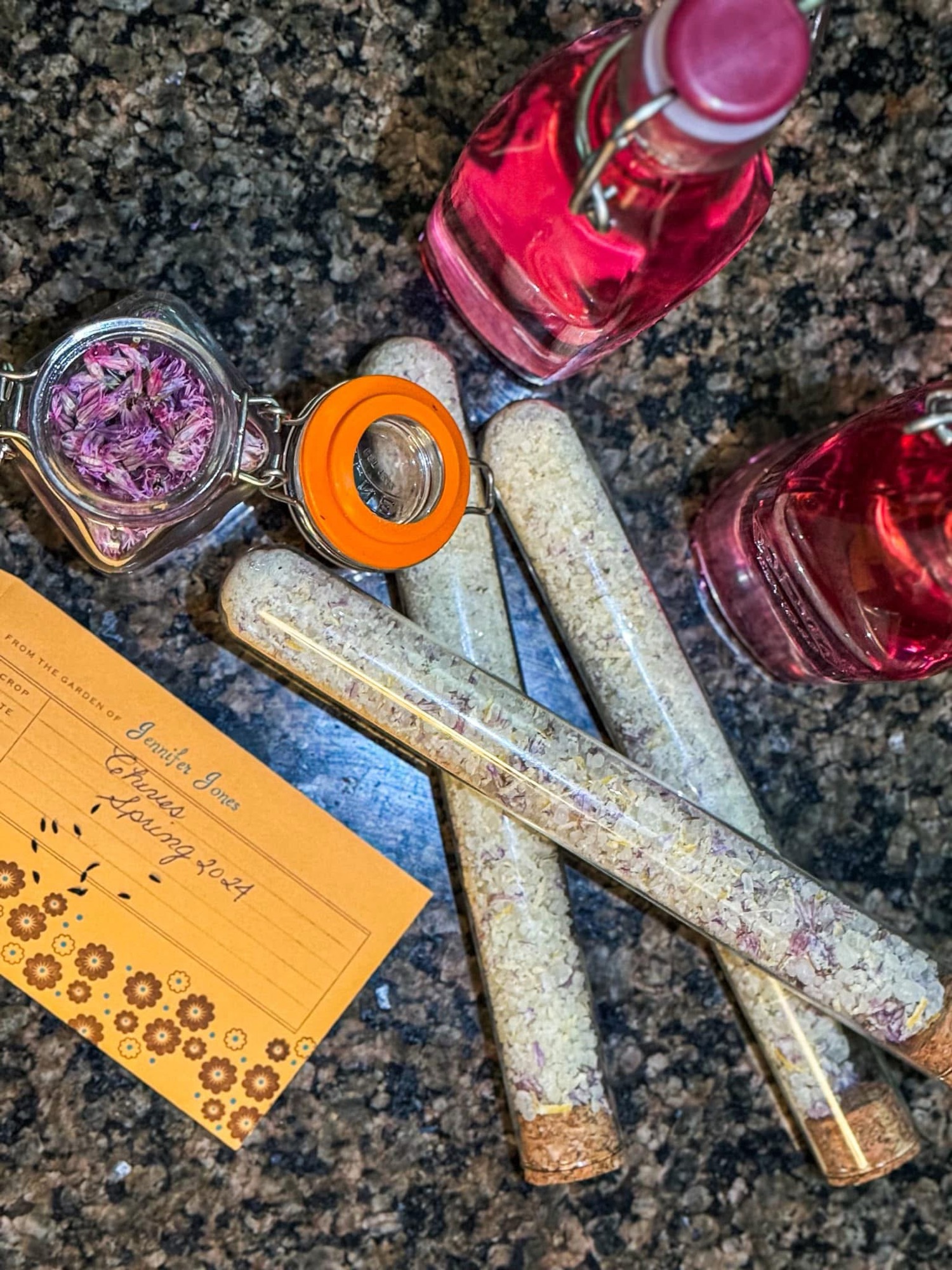
*Chive Blossom Vinegar: Pop those pretty blossoms into a jar, cover them with white or apple cider vinegar, and let them infuse for a few weeks. I’ve personally used this vinegar in dressings, and it adds a tangy, floral note that’s simply irresistible.
*Floral Garnish: Use the blossoms as edible decorations for soups, pasta dishes, or even cocktails. A few petals on a creamy bowl of soup? Insta-worthy!
*Compound Butter: Mix chopped chives and blossoms into softened butter, then slather it onto warm bread or grilled veggies. Pure heaven.
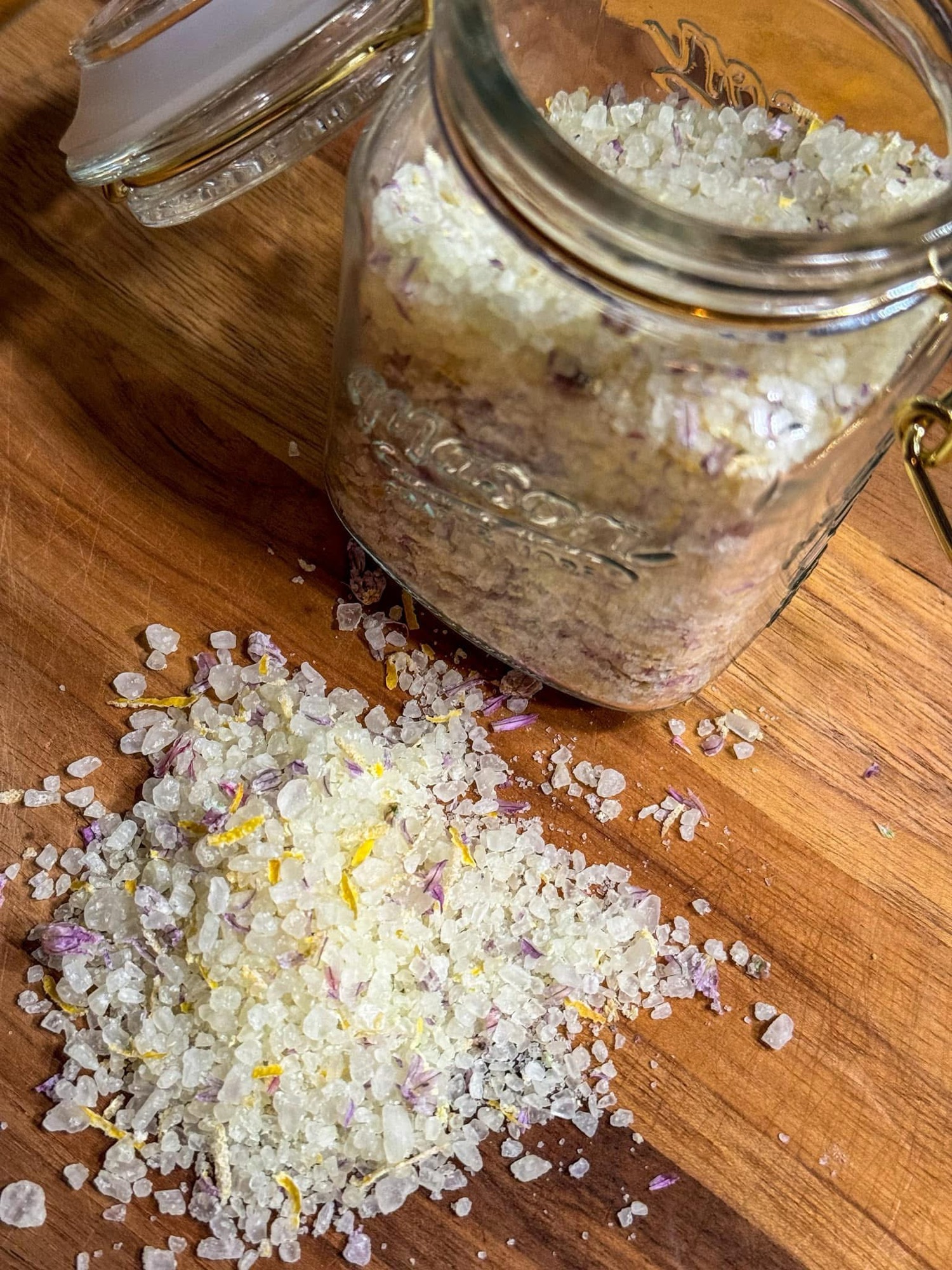
*Chive Blossom and Lemon Salt: My all-time favorite use for the blossoms is making seasoning or finishing salts. I dry chive blossoms, with lemon zest, and combine both with a blend of coarse and fine sea or kosher salts. This salt is a game-changer; delicious on roasted potatoes, grilled meats like pork, beef, or lamb, and in dressings. Plus, it looks stunning stored in glass jars, making it perfect for a hostess gift or simply admiring in your own kitchen. If you simply want to share a taste of the flavor in a gift basket, use a test tube for the salts, tied up with a pretty bow.

*Pest-Free Perimeter: Not only are chives delicious, but they’re also great companion plants. Their oniony scent helps deter pests like aphids and Japanese beetles. Chives make fantastic companion plants for roses.
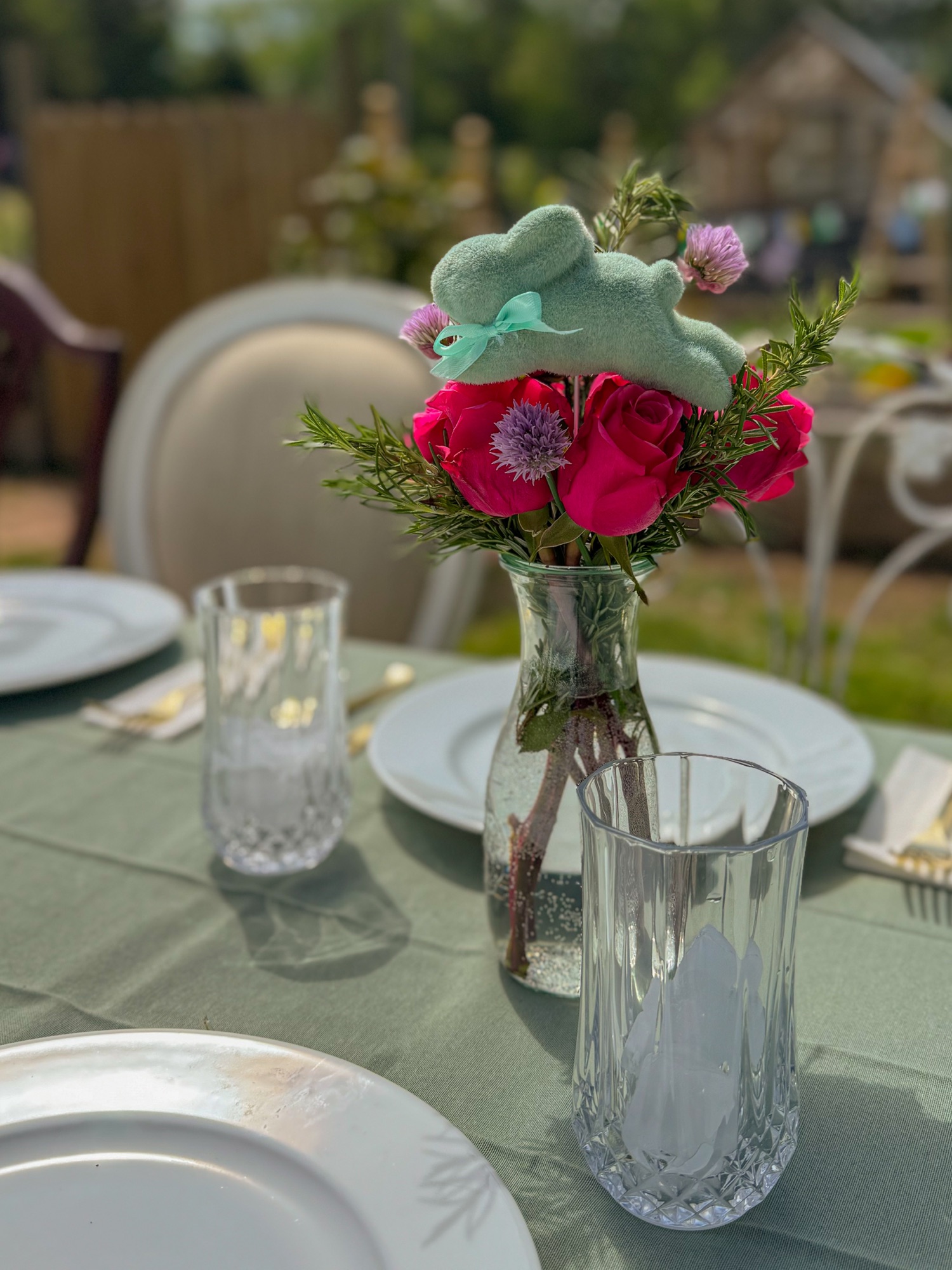
*Herbaceous Bouquets: Feeling fancy? Toss a handful of chive blossoms into a mixed herb bouquet. They’re an unexpected pop of color in floral arrangements
*Savory Pancakes, Biscuits or Cornbread: Stir chopped chives into your pancake, biscuit, or cornbread (with shredded cheddar cheese) batter for a savory twist that’s bound to impress.
So, there you have it, chive season is peaking now, making it the perfect time to let this humble herb and its stunning blossoms steal the spotlight. Whether you’re crafting delectable salts, infusing vinegar, or simply admiring the beauty they bring to your garden, chives offer an abundance of flavor, color, and charm. Make the most of this short season and enjoy the many ways these perennial delights can brighten your plate and your space.



 Seasons at Rosebriar
Leave a reply to Easy Ways to Use Chive Flowers in Your Everyday Meals Cancel reply